

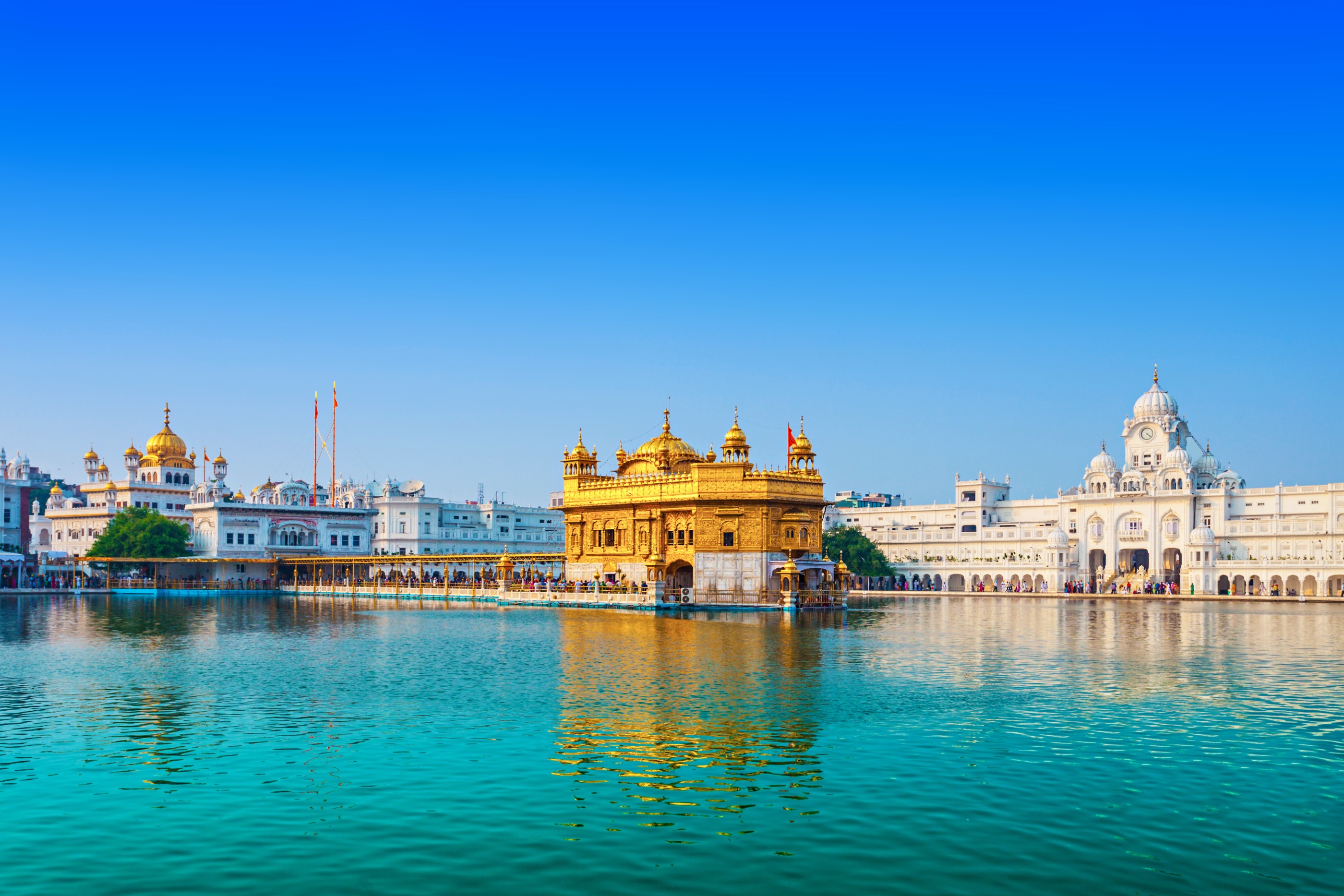
Punjab, a region in South Asia, has a rich tradition of history, culture, and agriculture that has significantly shaped its identity. Straddling parts of both India and Pakistan, Punjab is known as the land of five rivers: Jhelum, Chenab, Ravi, Beas, and Sutlej. These rivers, which give the region its name (from the Persian "panj" meaning five and "ab" meaning water), have made Punjab one of the most fertile regions in the continent, often referred to as the "Granary of India" or "Breadbasket of India/Pakistan". The region is also the birthplace of Sikhism, founded by Guru Nanak in the 15th century, and home to the Golden Temple in Amritsar, one of Sikhism's most sacred shrines.
Punjab, a region in South Asia, has a rich tradition of history, culture, and agriculture that has significantly shaped its identity. Straddling parts of both India and Pakistan, Punjab is known as the land of five rivers: Jhelum, Chenab, Ravi, Beas, and Sutlej. These rivers, which give the region its name (from the Persian "panj" meaning five and "ab" meaning water), have made Punjab one of the most fertile regions in the continent, often referred to as the "Granary of India" or "Breadbasket of India/Pakistan". The region is also the birthplace of Sikhism, founded by Guru Nanak in the 15th century, and home to the Golden Temple in Amritsar, one of Sikhism's most sacred shrines.